
When the power goes off, your home stays on
A battery stores your sunshine for the evening, buys electricity at the cheapest rates and, set up for backup, takes over automatically when the grid fails.
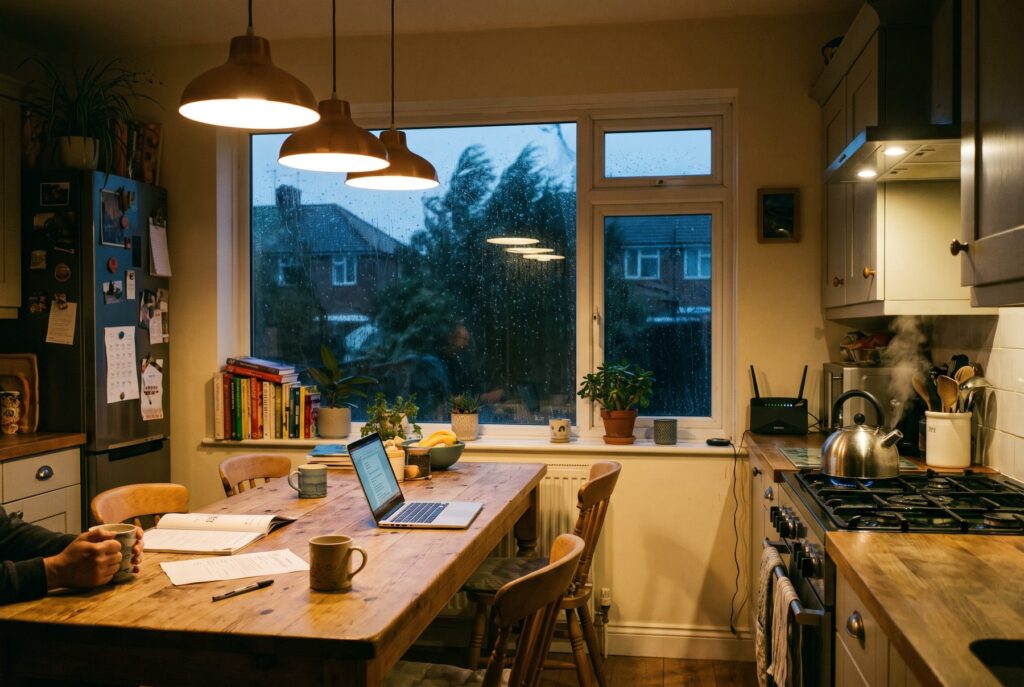
Backup on. Lights, fridge, boiler and Wi-Fi still running.
The bit most people don’t know
It surprises a lot of people: a standard solar system switches itself off the moment the grid fails, even in bright sunshine.
That’s deliberate. Engineers repairing the lines need to know nothing is feeding power back into them, so grid-connected inverters must disconnect. Until recently, that meant solar homes went dark with everyone else.
Modern backup-ready systems solve it. When the grid drops, an automatic changeover separates your home from the network, then the battery and panels carry on powering it safely, usually within a second or two.
Choose your level of backup
We’ll talk through what matters to you, from the freezer to a home office or medical equipment, and design around it.
A battery to store solar and buy cheap overnight power. The simplest and lowest-cost option, but it switches off in a power cut like the grid.
Lights, fridge, freezer, boiler, router and a few sockets on a protected circuit. The most popular choice: real peace of mind without a big price jump.
The entire house carries on as normal. It needs a larger inverter, battery and changeover equipment, and we’ll be honest about whether it’s worth it for you.
Try it yourself
Pick a time of day, then simulate a power cut. Watch the battery and panels take over, and see how long they last.
18:00
The battery was topped up at the cheap rate, so the house sleeps through it.
Kettle, toaster and boiler carry on from the battery while the panels wake up.
The panels run the house and refill the battery, ready for the evening.
The busiest hour of the day, covered entirely by stored sunshine.
Lights stay on, the freezer stays cold and the router keeps everyone connected.
Even in winter
A battery earns its keep all year. On a smart tariff it charges overnight when electricity is cheapest, then runs your home through the expensive evening peak.
a popular battery size, enough for a typical family evening
VAT on home batteries, even without new panels, until 31 March 2027
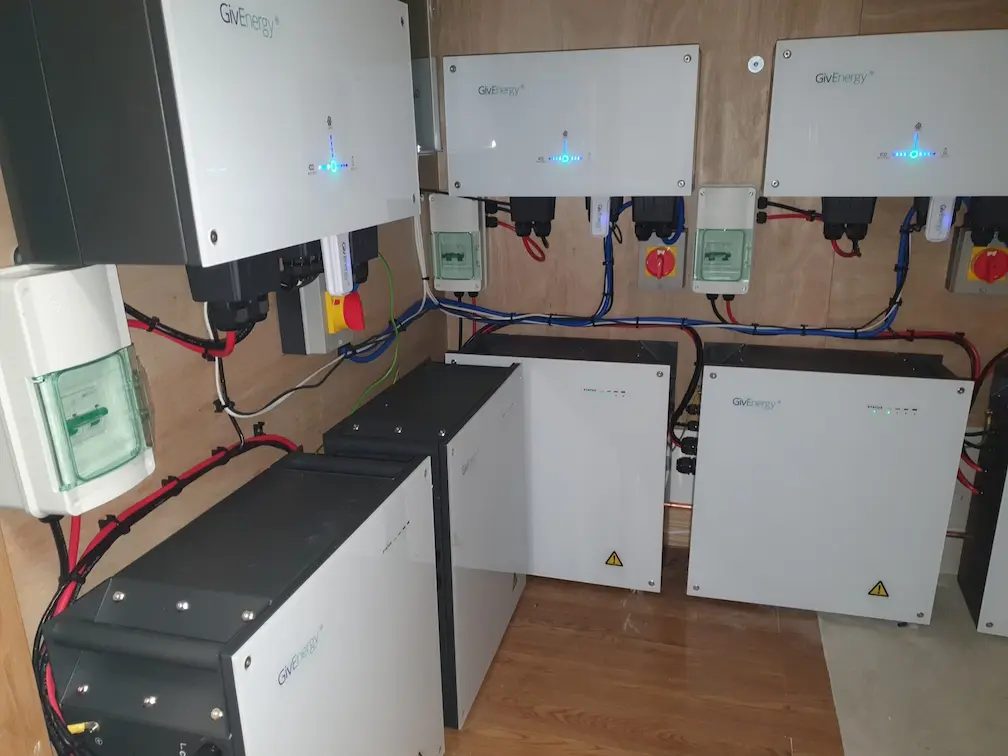
the battery bank we fitted for Roe Stairs: we do big ones too
years fitting and supporting electrical systems in Kent
Already have solar panels?
If your panels send most of their power to the grid for a few pence, a battery lets you keep it for the evening instead.
We fit batteries to most existing systems, whoever installed them, and can add backup at the same time. Since February 2024 a battery on its own also qualifies for 0% VAT in homes.
Battery questions
It depends on the battery size and what you run. A typical 9.5kWh battery can keep essentials such as the fridge, freezer, lights, router and boiler going for many hours, often through the night. During the day your panels keep topping it up.
Only if the system is designed for backup. Many batteries switch off with the grid unless they have backup capability and an automatic changeover switch. We specify backup-ready equipment and test the switchover before we leave.
Yes, to most systems. Since February 2024 a battery installed on its own in a home also qualifies for 0% VAT, until 31 March 2027.
Most homes suit a battery that can cover their evening and overnight use, typically 5 to 15kWh. We size it from your bills and how you use power, and many systems can be expanded later.
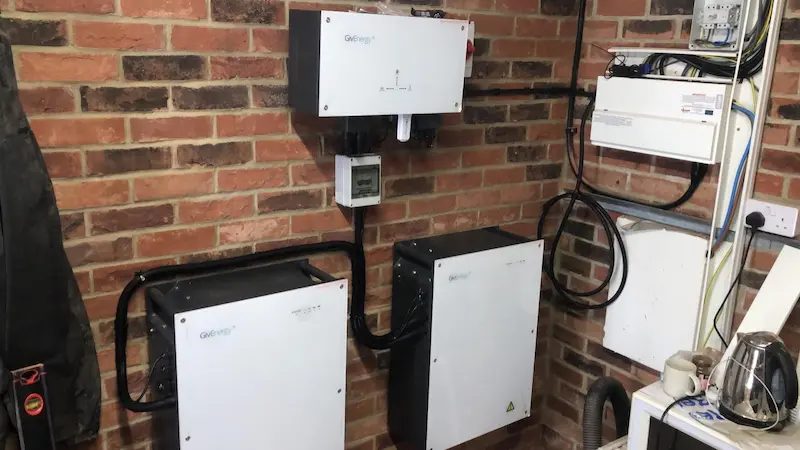
Yes, when it is the right product in the right place. We install to the current wiring regulations and manufacturer instructions, choose a suitable location such as a garage or utility room, and fit the protection the battery needs.
Never sit in the dark again
Book a free survey and we’ll design a battery and backup plan around your home, your bills and the things you can’t be without.
We use cookies and similar technologies to store and access device information, which helps us process data like browsing behavior. Not consenting may affect some features and functions.